In January, the Wind River changes its pace.
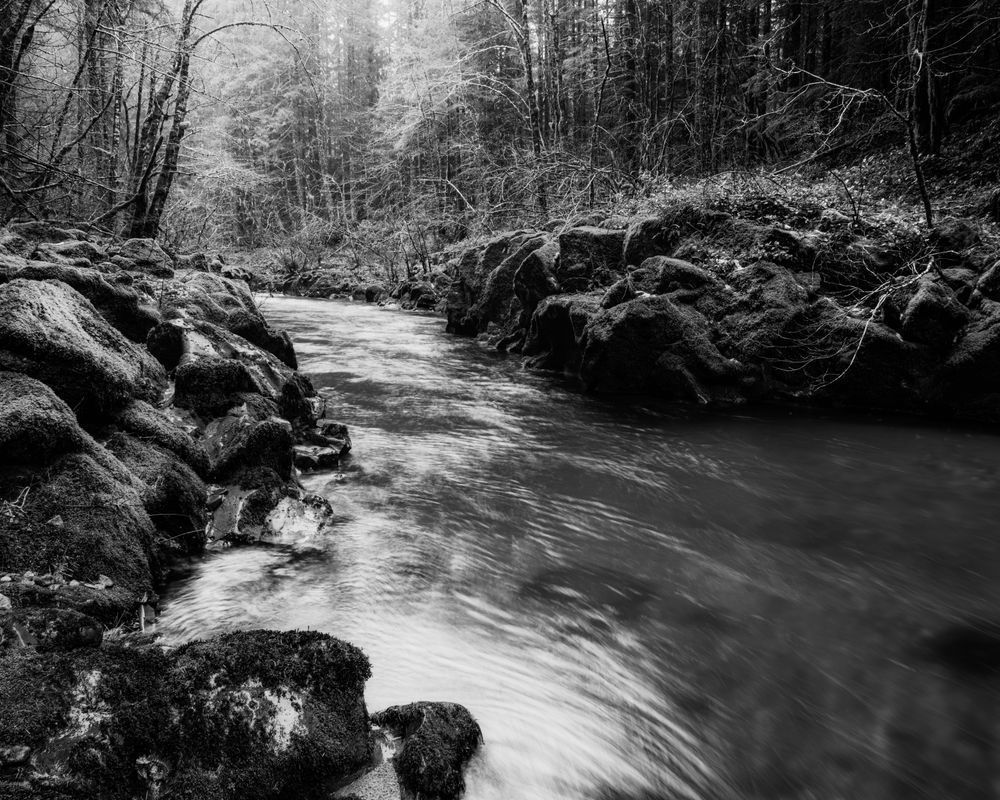
With the crowds gone and the leaves fallen, the forest opens up enough to reveal its structure. Mossy basalt boulders line the riverbanks, shaped over decades by the current and seasonal floods.
I took this photograph along a narrow part of the river where the water slows and curves between the rocks and trees. Using a long exposure, I softened the water’s surface to show movement while keeping its texture. My goal was for the river to feel alive, not abstract.
The Wind River runs through the western Cascades, where volcanic rock meets thick temperate rainforest. The basalt here is ancient, layered and cracked from old eruptions. Over the years, winter rain and melting snow have carved channels in the stone, forming these quiet corridors of water and shadow.
The forest around the river has its own story. Before this land became part of the Gifford Pinchot National Forest, Indigenous communities lived here and depended on these rivers for salmon and travel. Later, logging changed some areas, but places like this still feel resilient and quietly enduring.
Standing here in winter, I noticed a sense of balance. The river moves calmly, and the forest is still. Everything feels at rest.
This photo is one of four I made during a January trip to the Wind River near Carson, Washington. It shows what draws me back to black-and-white photography: texture, patience, and the quiet persistence of water moving through stone.