Not every part of the Wind River moves the same way.
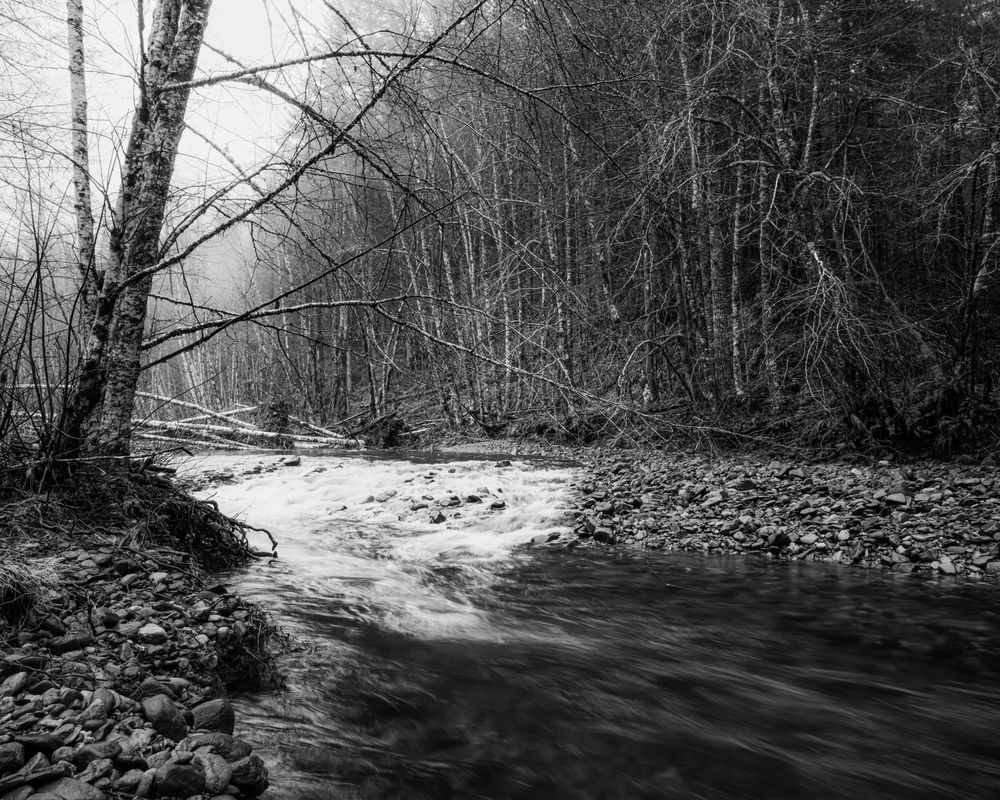
Here, the river narrows and bends. The current gets stronger, and the water speeds up before slowing down again downstream. You can hear it before you see it.
I took this photo on a gravel bar where winter runoff had moved the stones. Fallen trees lean across the bank, their pale trunks crossing the darker forest behind them. The long exposure keeps detail in the water but lets the surface stretch and pull as it turns.
This part of the Wind River runs through the western Cascades in Skamania County, Washington. The river drains snowfields and forested slopes before joining the Columbia River near Carson. Seasonal floods change these gravel bars every year. What seems stable is often temporary.
The forest here is a mix of second-growth and older trees, shaped by logging in the early 1900s and natural regrowth since then. Salmon once moved upstream in large numbers, and people are still working to restore their spawning habitat throughout the watershed.
Standing here, I noticed a feeling of change. The river is not rushing or resting. It is adjusting, turning, and finding the easiest path forward.
This image continues the study I started with the first photo. It moves from stillness to motion, and from being closed in to being more open. It is part of a four-photo winter series I made along the Wind River in January.